Rwenzori Bugoye, Uganda
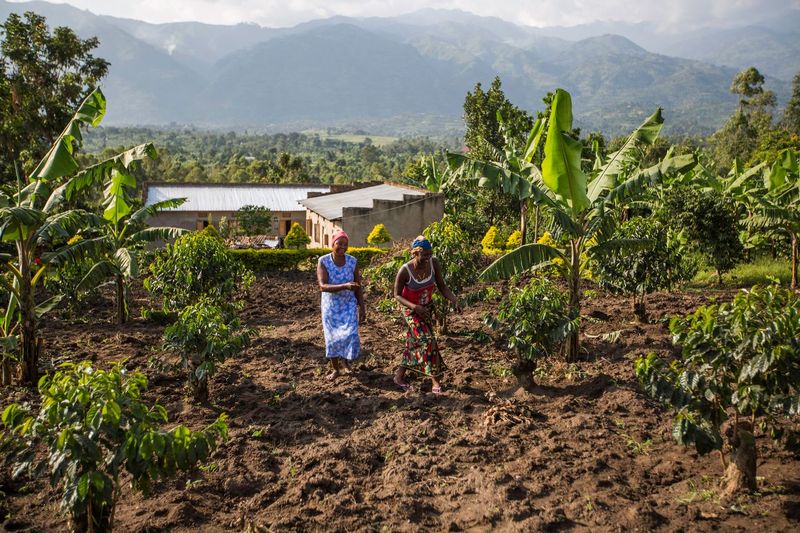
Rwenzori Bugoye, Uganda
Balanced and sweet with notes of raspberry, raisins, dark chocolate with cane sugar sweetness , full body and mild acidity with a long aftertaste.
Roast level: medium roast.
It’s delicious in any brewing method
Price range: 492฿ through 3,080฿
Rwenzori Bugoye, Uganda
Country: Uganda
Region: Rwenzori – Western Uganda
Town: Bugoye, Kasese
Owner: Various members of Rwenzori Arabica Scheme Kyagalanyi Coffee Ltd.
Processing: Fully washed and dried on raised bed
Altitude: 1,700 to 2,200 metres above sea level
Varietal: SL 14 and SL 28
For many, Uganda might not be the first country that comes to mind when thinking of high-quality Arabica coffee, especially since the country has been traditionally known as a producer of Robusta. The country has the ideal climate and geography for coffee production, yet producers do face various infrastructure challenges. The slopes of Mt. Elgon in the East (bordering Kenya) are ideally suited for the production of high-quality specialty coffee.
Benefiting from a bi-modal rainfall season and high altitudes, the country has a pleasant climate year- round and is lush with greenery. The mountain ranges to the east and west are home to Uganda’s Arabica farmers; Robusta is produced on the central plateau.
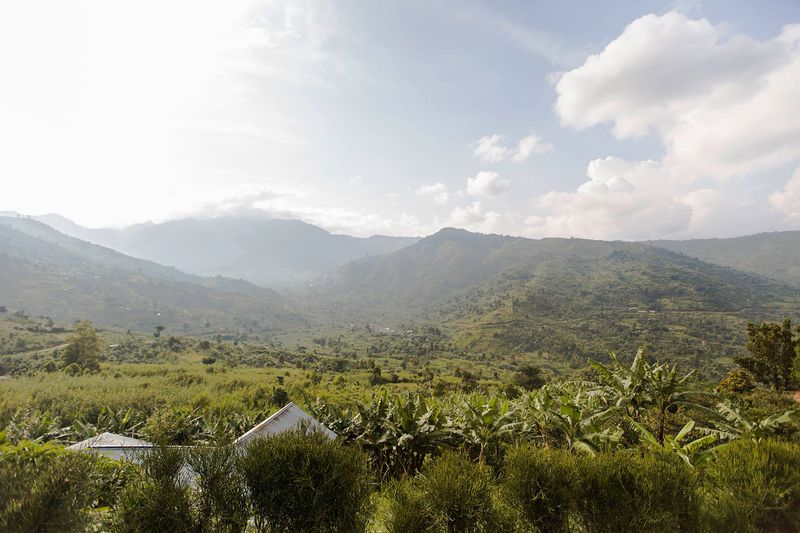
The Rwenzoris are a mountain range famously known as the ‘Mountains of the Moon.’ They stretch for 120 kilometres along the Western Uganda border with the Democratic Republic of Congo. The snow-capped peaks reach over 5,000 metres above sea level and support glaciers that are the start of many rivers flowing down the slopes (including one source of the Nile). The slopes of this range are where the government of Uganda is promoting coffee production as a key driver for rural development.
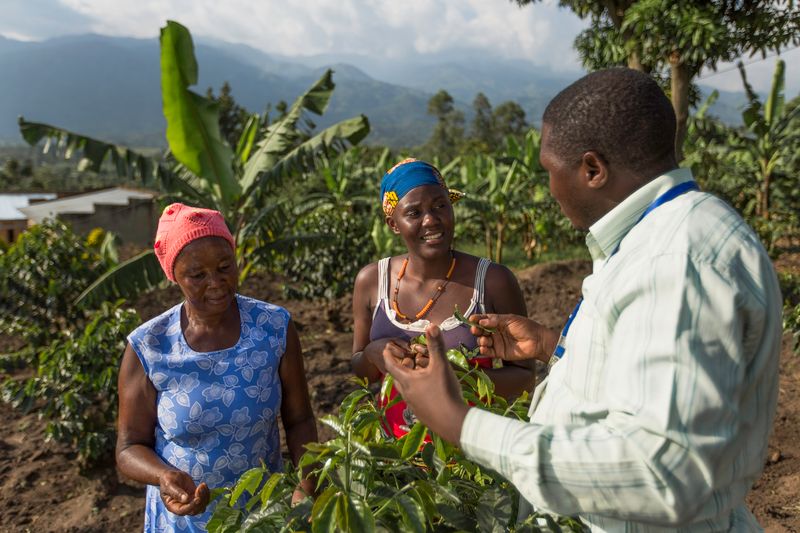
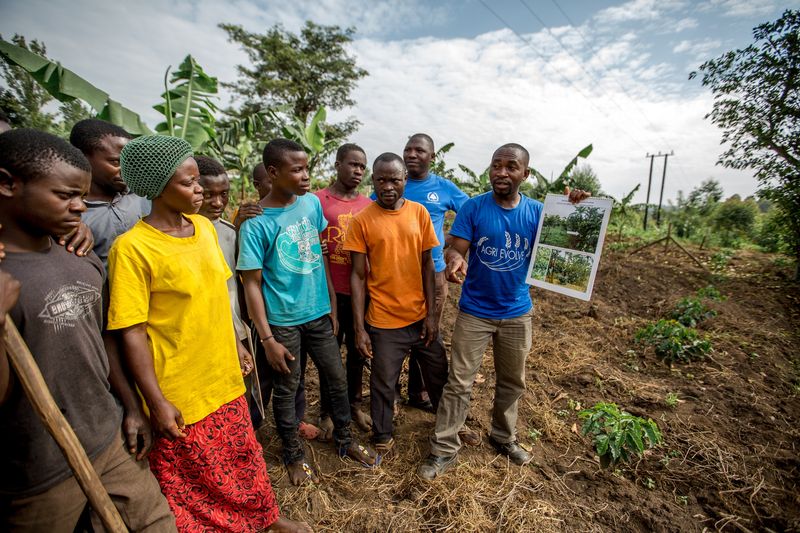
Most farmers have around one hectare of land, and all work on the farm is conducted by hand, usually by immediate family members. Families work together in groups, usually community-based but sometimes also extended family groups, to process and market their coffee, an approach known as ‘share farming.’ This helps improve processing, better control quality and increases their marketing ability.
During the harvest season, Kyagalanyi (The Rwenzori Arabica Scheme) encourages farmers to deliver cherry to the respective wet mills instead of hand pulping on their farm. This has given the programme increased control over processing activities, which can be challenging in the region as rains during the harvest season are common. Most farmers live up to 50 kilometres away from the washing station. Due to the long distances, Kyagalanyi has a truck that offers free transport services that visits every farmer group 1-2 times per week during harvest season. As the coffee trees flower multiple times, the harvest season is quite long (4-5 months). Farmers normally pick coffee at least once every week.
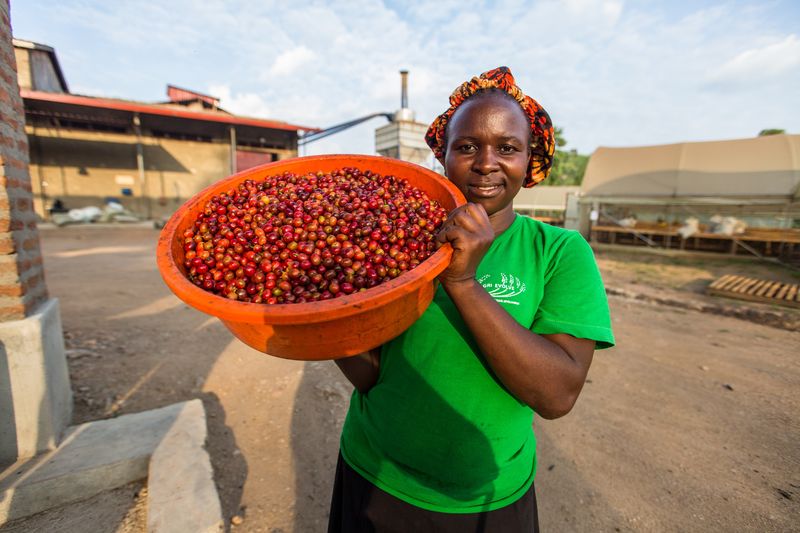
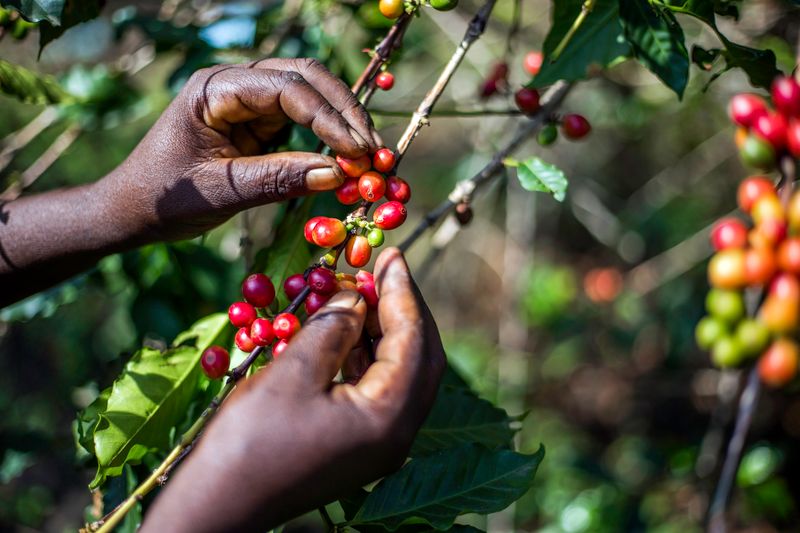
Kyagalanyi implements a 95% red cherry policy. Farmers are requested to only bring in fully ripe cherry, and this is checked at every collection point. If the quality is not up to standards, producers will have to sort their cherries at the collection point until 95% red before their coffee is purchased. Kyagalanyi provides tarpaulins and racks to assist in the sorting.
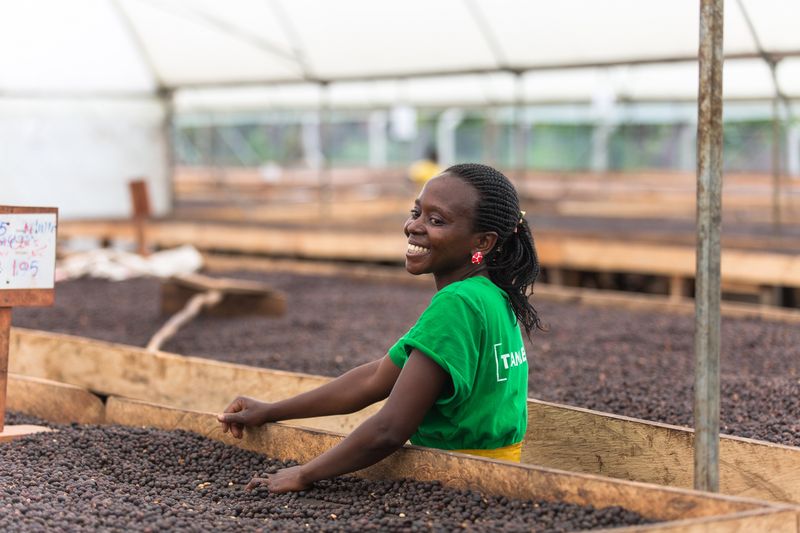
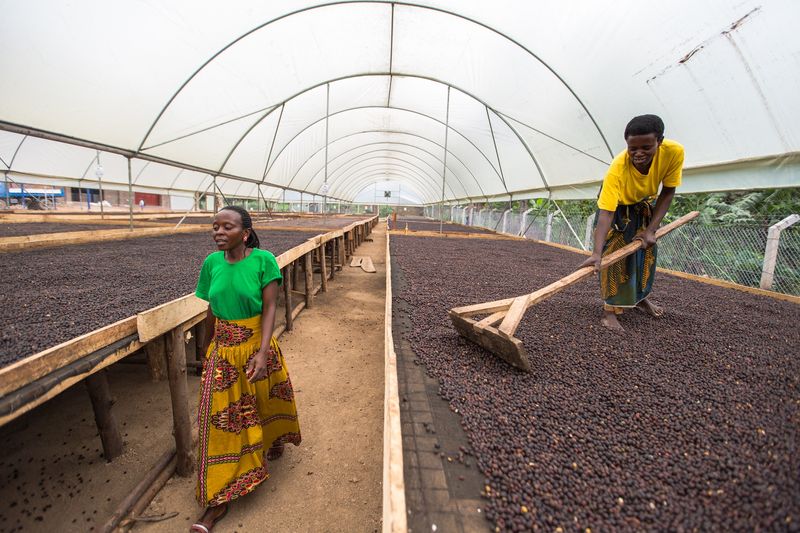
This coffee was processed using the washed method. Once delivered, the coffee is floated, pulped, and fermented for twelve hours in large steel tanks. The coffee is then washed through channels, graded, and is then moved to dry on raised beds inside polytunnels. The air is too hot to dry outside uncovered, which can cause cracks in the parchment. Additionally, regular rainfall makes it equally difficult to dry in the open. It will stay here for three to seven days depending on the weather, and drying is controlled by turning the coffee regularly and maintaining an equal depth of cherry on the beds. The coffee is then moved to the dry mill in Mbale to dry mechanically for three to four days.